The Myth of the Perfectly Equal Race Format
The perfectly equal race format is an illusion; learn how race length, starts, and session structure change what a fair comparison can actually tell you.
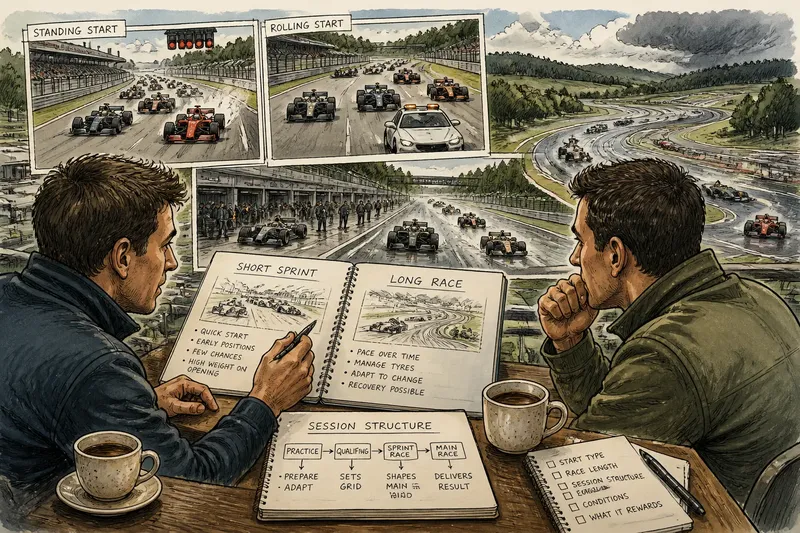
You compare two race results over coffee: the same drivers, similar cars, different weekends. One contest lasted a short sprint; the other ran long enough for changing conditions and careful pace to matter. The perfectly equal race format is an appealing idea, but the length, start procedure, and session structure can change what those results mean.
That does not make comparisons useless. It means you need to identify what each format rewards before treating finishing order as a direct measure of relative ability. When a comparison feels contradictory, the trouble is often not the result itself but an assumption about what the contest asked competitors to do.
When results conflict
A common snag is seeing a driver win one race and finish behind a rival in another, then treating one result as evidence that the other was misleading. The likely cause is that “race result” compresses several different tests into a single placing. A short contest may put greater weight on immediate pace and position; a longer one may give more room for changing conditions, restraint, or recovery from an early setback.
Start by asking what each event demanded, not which result deserves to be believed. Compare the same parts of the contest: opening-lap position, pace while running in clear air, consistency later on, and the ability to respond to interruptions. If the formats created different demands, describe the results as evidence about different strengths rather than forcing them into one universal ranking.
Race length changes the task
Race length is more than a larger or smaller container for the same competition. In a short race, there may be little time to recover after losing a place or to make a cautious opening pay off. A quick start and decisive early positioning can matter disproportionately because the field has limited time to spread out and produce another opportunity.
A longer race can introduce other considerations. Drivers and teams may need to manage the car, respond to a changing track, and choose when to push. That does not mean endurance automatically makes a contest more revealing or fair. It means the contest tests a broader stretch of decisions, some of which may be less visible in the final order than a pass or a mistake.
Say you are comparing two drivers who appear evenly matched in a short sprint and a longer race. In the sprint, one gains places at the start; in the longer event, the other stays close early and moves ahead after the race settles. The observable result is not that one format exposed the “true” driver. It is that the first format placed more emphasis on immediate position, while the second allowed sustained pace to contribute more to the outcome.
When race lengths differ, try separating the comparison into phases. Ask who gained or lost ground at the start, who held position during the middle, and who improved or faded later. Even a simple description of those phases is more informative than comparing finishing places alone.
Starts reshape opportunity
A second source of confusion is treating every start as the same test of skill. A standing start asks drivers to launch from rest in close company, while a rolling start begins with the field already moving under an organized procedure. Both bring cars together at the opening, but they create different immediate problems and different chances to gain ground.
With a standing start, timing and traction can affect how quickly a car gets moving. Drivers must also judge the space around them as the field accelerates. In a rolling start, the field approaches the racing phase already in motion; timing, formation, and the point at which drivers can race freely shape the opening instead. Neither procedure removes chance, and neither makes the resulting order a clean reading of underlying pace.
If two events use different starts, do not treat the first corner as a directly comparable checkpoint. Instead, note who gained positions before the field settled and who showed pace once the opening rush had passed. That distinction helps prevent a strong launch from being mistaken for a full-race advantage, or an awkward opening from obscuring the pace that followed.
Session structure matters
Formats also differ in how competitors reach the race. A weekend may use practice, qualifying, and a main race; another may add a separate short race or use a qualifying session that determines more than one starting order. These arrangements affect preparation and the consequences of a single session. A driver who has little time to adapt faces a different problem from one who has several chances to refine a setup and recover from a poor session.
Qualifying is especially easy to misread. A starting position records performance in a particular session, under its conditions and rules. It is not a promise of the same position at the finish. If a format uses a separate race to set the grid for another contest, the opening result also reflects the route through that session structure, not simply a fresh comparison of pace.
When results seem hard to reconcile, draw a small timeline: practice or preparation, qualifying, any intervening race, then the main event. Mark which result set the grid and whether an earlier session shaped later choices. This makes it easier to see whether a driver’s final position followed from race pace, a starting place, or the format’s sequence of opportunities.
What does a fair comparison mean?
Can two different race lengths be compared?
Yes, if the comparison is specific about what it measures. Finishing positions can be noted, but the explanation should account for the different demands created by a sprint and a longer contest.
Does a rolling start favor a particular driver?
It can reward skills and preparation that differ from those most visible in a standing start. The outcome still depends on the cars, conditions, and surrounding field, so the start procedure alone does not identify a universal advantage.
Is qualifying part of the race result?
Qualifying is usually a separate session, but its result can shape the race by determining starting positions. When comparing performances, keep the session result distinct while noting how it influenced the contest that followed.
Can one format be more fair than another?
Fairness depends on the rules and on what the event is intended to test. A format can apply the same procedure to everyone without making every driver’s task identical in practice.
Make the comparison useful
Before judging two results, check a few concrete points:
- Race length: Was one contest a sprint and the other a longer race? Describe how much room each offered for recovery and changing pace.
- Start type: Did the field launch from rest or begin moving together? Separate the opening from the pace after the field settled.
- Grid formation: Did qualifying set the start, or did another session affect it? Keep that route visible in your account.
- Session sequence: Did an earlier race or limited preparation shape the main event? Note what competitors had to do before the final contest.
- What you are comparing: Is the claim about starting speed, sustained pace, or finishing position? Choose evidence that matches the claim.
It is not worth trying to calculate a single “format-adjusted” score from results alone. Without a clear definition of what the score should represent, that extra arithmetic can make a judgment look more precise without making it more useful.
The perfectly equal race format is not a practical standard for deciding whether one result counts. A better comparison names the conditions that shaped the contest, then keeps its claim proportionate: this driver made the stronger start, held pace longer, or finished ahead under this particular structure. That small change in wording preserves what the result can tell you without asking it to answer a different question.